
Word of the day: Looping – using pre-recorded sound material which can be repeated and layered on top of one another to create ostinati patterns.
Two weeks ago (yes I know I am a liiittle behind on the updates), I had my first Technology in Music Education class and was genuinely overwhelmed with how little I knew about recording technology. To be fair, I was aware of my small technological knowledge prior to starting this class but I never really needed to face it, at least not until now. The fear didn’t linger for too long, however, as I realised that I was in the same boat as many of my classroom peers (and I’m sure some of you reading this blog post as well!). I guess that is quite telling of the type of music education we have all received at some point in the past.
Thankfully, the first class wasn’t aiming to throw us all into the deep end. Our lecturer, Dr James Humberston, eased us into the whole ordeal by introducing looping as a good way to begin composing music on a computer. ‘But,’ you stop and ask yourself ‘how am I supposed to loop? And what is a loop anyway?’ To that I say, go check out Ed Sheeran’s live performances and that will give you a pretty good idea. This one is pretty good!
After getting a good dose of the Sheer, you might be super excited and ready to get loopy, but then you stop and realise that even though you’re a techy newbie, you still know that all good things come with a price. ‘I don’t want to spend my hard-earned monies on a very expensive looping software!’ you think worriedly.
Well it’s your lucky day because there is a free browser-based program called Soundtrap and it is great! You do have to pay a monthly or annual fee to be able to use the full range of features the program has to offer. HOWEVER, a free trial lets you test out the program for a whole month and even if you end up not wanting to pay, the free features offered are still good for those who are new to playing around with looping (that’s me!).
The program itself has a user-friendly interface with easy-to-access looping tracks.
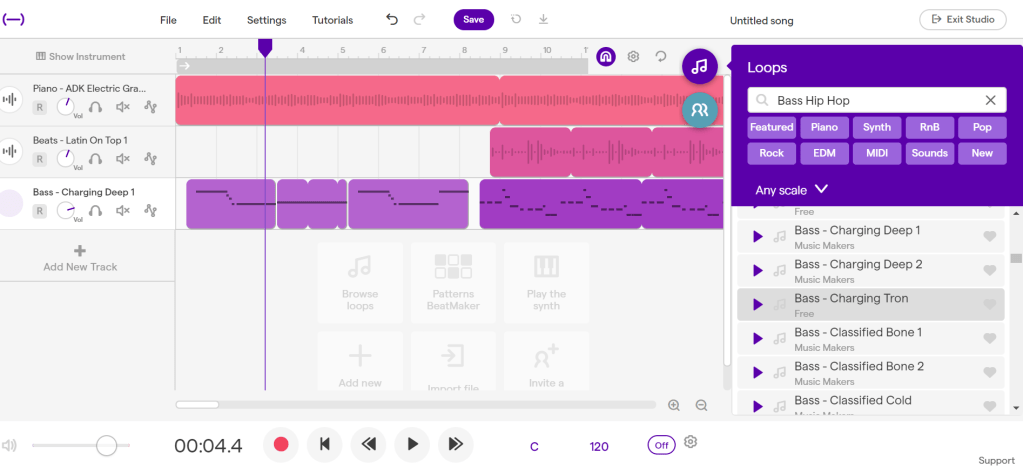
The tracks range from piano, bass, and guitar sounds to a variety of beats and drum sounds which can all be used to create a final loop track. One criticism I might have with the program is that the sounds offered do not go beyond the typical pop music set-up. Even so, there is the option of making your own recordings of other instruments or vocal sounds and then turning them into loops which can ultimately offer a significant room for creativity and innovation!
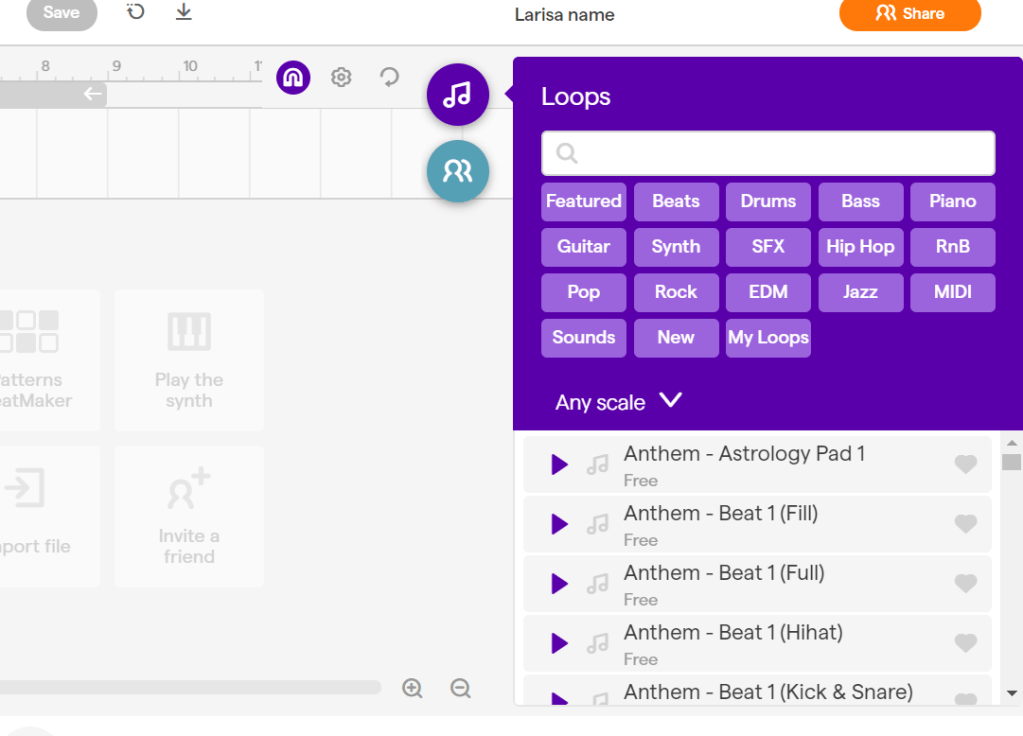
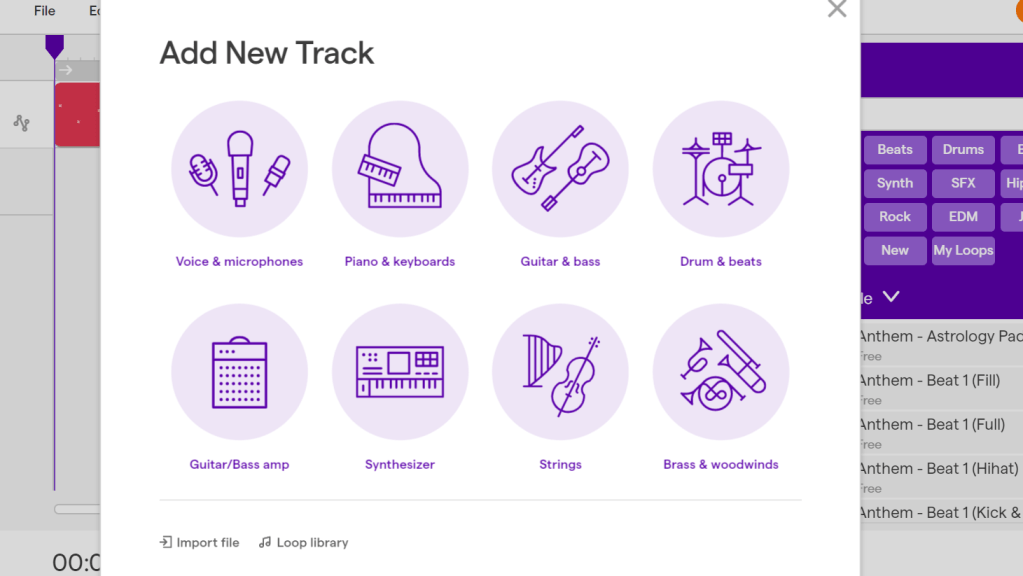
During the lecture, we of course touched on the significance of this program in music classrooms and let me tell that the high school me would’ve loved experimenting with a program like this. It offers students from both the musical and not-so musical backgrounds an opportunity to not only express themselves but to also develop their musical ear and learn about all the concepts of music in a more contemporary setting (studio producing). For those of you who would love to use Soundtrap as part of your lesson plans, check out Soundtrap’s amazing collection of soo many lesson plans! I think I will do a post on them later on because it is such a great resource!
Now, let me make a little classical musician’s confession. Throughout the lecture, I had to face an uncomfortable realisation: many times I found myself dismissing contemporary music created through the means of technology as ‘less serious’ and not as ‘challenging’. Of course, this was more a reflection of a lack of want to learn new skills and expose myself to a variety of music genres. Why? Well simply because I was, and still am at times, too scared to learn new styles and techniques which aren’t familiar to me. My personal music education has been grounded from the very beginning in classical style which made me musically quite proficient in some ways but also very limited in many other ways. And as I have learned through attending my first music technology lecture, the skills in digital music composing, producing and performing are neither easy nor less musical and creative. In fact, music technology could help me become a more versatile and innovative musician. But even more importantly, it could lead the students I will one day have the opportunity of teaching into exploring ideas through a medium that feels familiar, current and relevant to their environment and experiences.
On that note, I would like to end this post by leaving you with a little experimentation of my own. I tried to use an interesting blend of beats and sounds, bass being the dominant and more melody driven in this case. Because the bass was in a midi format (more on that in future posts), I was able to change certain pitches from the already made track in order to fit it into what I was kinda going for. I also tried to record my voice on top of the track (with some added effects). It is by no means a perfect track but I had lots of fun while making it and have mostly used it as a learning tool. This has awakened an interest in looping I never knew I needed and there will definitely be more ‘messing around’s in the future 😀
https://www.dropbox.com/s/5jt272bhelnf31t/%27Messing%20around%27%20SoundTrap.mp3?dl=0
 Exploring Technology in Music Education