Posts

Mixed-bag Arrangement – what is it good for? Absolutely everything 🎶

Why hello there, it’s been a while (almost a whole year 😬).

Life definitely got busy and, unfortunately, I did end up neglecting this blog a little. However, I did miss interacting and discussing my thoughts and ideas on different education-related topics so what better way to have a come-back than to write a blog post about an assignment I am currently working on (in my last year of Music Education degree! Woo!).

Yes, it is an assignment and this may not sound incredibly riveting. However, I believe that every assignment I have been working on this semester has been so incredibly beneficial to my further growth as a future music educator and this one is no different. So let’s get to it!

Hmm a mixed bag you say?

This assignment is part of the Composition for Music Education unit in which we learn how to teach and/or do composition for our students. In this particular case, we were tasked to arrange or compose a song or a piece that the students can easily learn through both aural learning and notation on any range of classroom instruments. The idea behind the assignment is that often we will have students of differing skill levels who can either play 5 instruments and read notation incredibly well or are not even able to clap a simple beat pattern (and anything in between!). Therefore, we need to be able to accommodate to all of our students, i.e. the ‘mixed bag’ approach, where each part is translatable to any number of instruments.

The philosophy of mixed bag arrangement, from my perspective anyways, seems to argue two important points: music should be easily accessible and played by every student in your classroom and every student should have the opportunity to improvise and compose.

During the NSW 2015 Orff conference, James Humberstone discussed the importance of exploring a variety of popular music or Post-Minimalist film music as a useful way to not only engage students with a greater variety of musical repertoire but to also encourage aural learning through the Orff method of listening and repeating as well as learning how to improvise (Humberstone, 2015). Indeed, it is incredibly important for students to not only feel connected to the music studied in class but also have the opportunity to practice their listening and composition skills, something that can easily be overlooked in many music classrooms.

This sentiment is echoed by Jim Vennemeyer in his 1999 article ‘Orff + Technology = Composition for Kids’. Yes, the article is quite a bit older and yet, I found it expressed the same sentiment taught by our lecturers and that is that “by combining Orff teaching strategies and instrumentation with the technological advances of the latest composition software, many of the barriers normally associated with teaching composition to […] students are removed” (p. 36).

I cannot agree more! Through this mixed bag arrangement, we are tasked to think about how we can make playing more accessible to our students without necessarily relying on notation too much. A great solution to this is to either use approached such as Orff Schulwerk method where there is a great emphasis on aural learning, or an Informal Approach where the emphasis is given to self-learning by students, mostly provided through many technological resources by the classroom teachers. In turn, because the students are already prepared to succeed by the teacher, they will naturally feel more comfortable in taking their music learning towards the next step: improvising and composing.

David Beckstead further the emphasises the importance of the improvisational aspect within the music classroom in his article ‘Improvisation: Thinking and Playing’. He states that due to there being very little cognitive difference between complex and simple improvisation, as music teachers we should actively encourage any form of creative outlet for students to engage with (2013). The point is not to see which student is naturally talented in creating complex melodic lines but rather to encourage creative output for every single student. This all comes back to the mixed bag approach in which every student is given the opportunity to play any instrument they feel comfortable with which in turn makes the student more relaxed when faced with the scary concept of IMPROVISATION.

Now you may wonder, how does one choose an appropriate piece that could work really well for the Mixed Bag Arrangement?

Well, I’m glad you asked.

Mixing the bag

Here were a few of the points I tried to consider when choosing my piece (which was Game of Thrones opening theme btw):

  1. I was hoping to create an arrangement that could be potentially used by older students, especially as I am soon to start my final year practicum. GoT theme probably wouldn’t be alright to use for younger grades but Year 11 and 12 could work quite well.
  2. I tried to choose a piece that had repetitive and/or sequential melodies and harmonies as it is easier to learn aurally.
  3. I tried to find a piece that also had a repetitive percussion parts which would give an opportunity to play for those students who don’t really play any instruments.

Of course, I had to do some tweaking with the actual theme but the point is not to mimic the exact nature of the way the music is originally played but rather to break it down into several different parts which the students can easily play. After much deliberation, this is how I decided to structure my approach towards the arrangement:

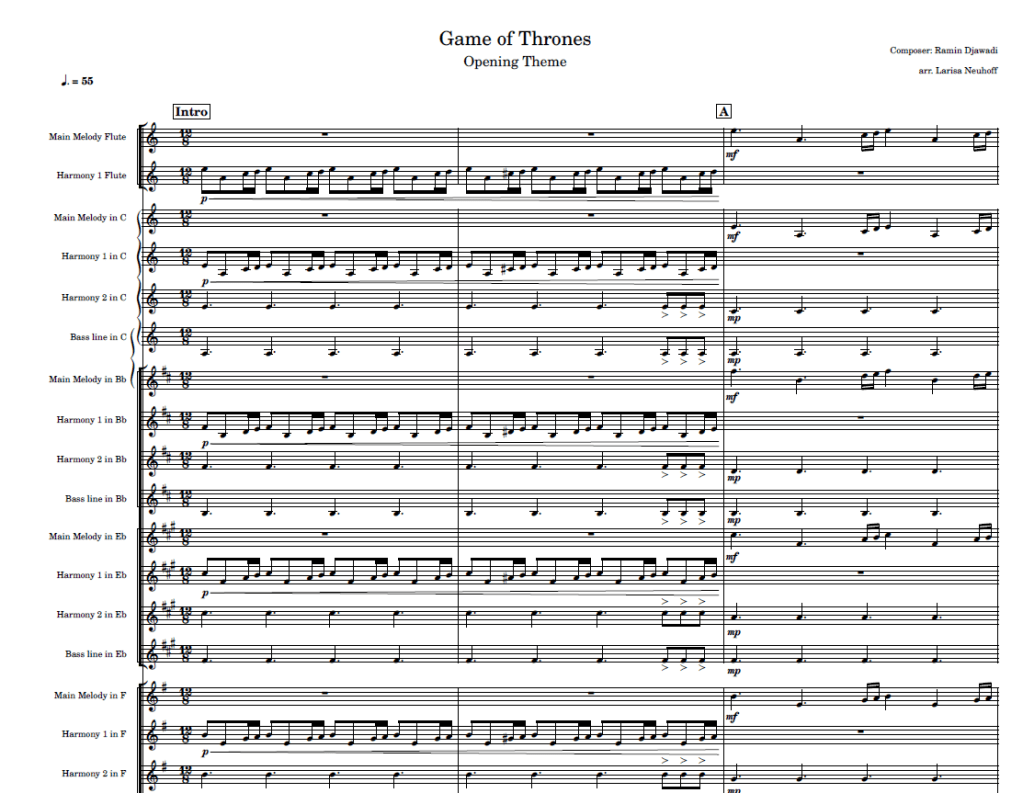
  1. Make the key an easy A natural harmonic (A aeolian).
  2. Have four parts for melodic instruments. One is the main melody, one is the repetitive ostinato-like part, one is a harmony part with long chords (made specifically for students who can’t read music as well) and the last part is a bass part.
  3. Have three percussion parts. One of the percussion parts is incredibly easy and is really only reserved for students who really struggle with notation or playing any instruments. However, it can also serve for those students who find more enjoyment from playing any parts as long as they are part of a larger ensemble. The other two parts are slightly more complex but incredibly repetitive and still don’t require a great amount of skill.
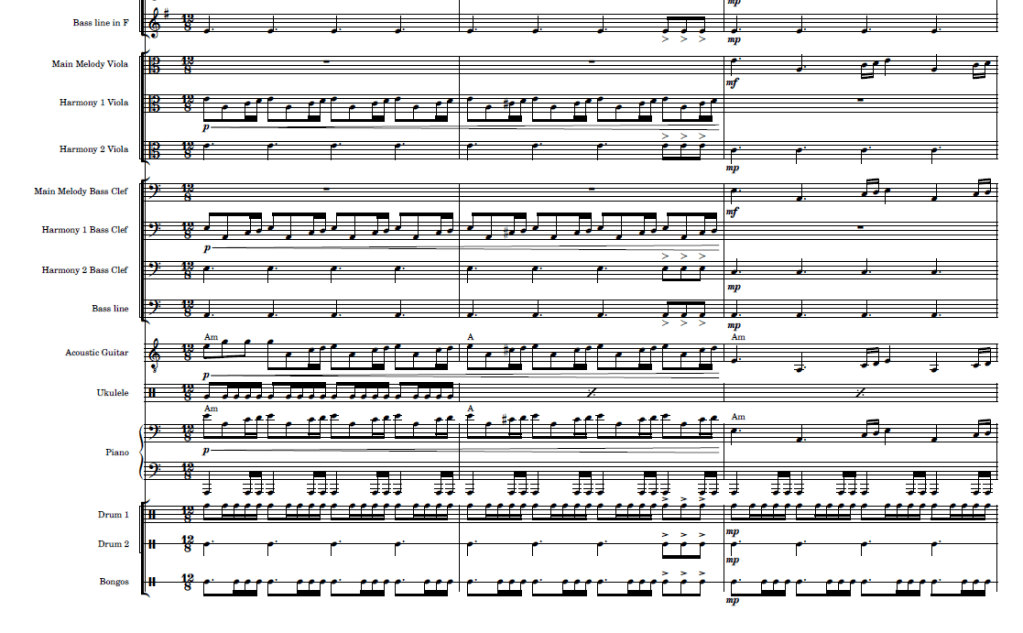
  4. Provide musical notation for every type of instrument. See Image 1 and 2 below for an example of how my final score looked like.
  5. Create an Orff instrument arrangement. This is beneficial if some students haven’t brought instruments to class. Likewise, if I want to focus on modelling aural learning through Orff methodology, having an Orff instrument arrangement makes sure that the students are all playing similar instruments and are able to directly copy what I as a teacher am trying to convey.
  6. Provide extra learning resources through the form of audio recordings of each individual parts and video recordings that help the students learn and practice their individual parts. In this way, the students can also be tasked of learning the arrangement not through Orff approach but through Informal Learning where they use the resources provided by the teacher to learn within their respective groups. This is particularly useful in promoting individual and creative learning as well as giving the students a certain degree of autonomy. Lucy Green, the pioneer of Informal Learning argues that through this autonomy, the students’ enjoyment might actually increase and, as a result, create ‘highly motivated’ individuals who will ‘more likely […] apply themselves’ and ultimately, learn more (2008, p. 93).
  7. Encourage students to create and arrange their own music through the usage of familiar material from the mixed bag arrangement. I have included the midi files of each individual part which the students can use in programs like GarageBand or Soundtrap. I link before a short loop I created as an example of what the students can potentially do with the provided midi files.
Final reflection

I am definitely not a composer nor do I arrange music regularly so this assignment definitely proved to be useful just for the fact that it helped me further develop these essential skills. However, even more so, I felt that I learned the importance of providing students with every possible opportunity to be successfully involved in classroom activities, with no fear of making mistakes or being able to successfully play instruments.  As a ‘serious’ musician myself (what does that even mean??), this concept is definitely not something I have often seen throughout my music education so I have to say, it is incredibly refreshing and has definitely encouraged me to be more intentional and thoughtful with my classroom resources 😊

Reference list:

Beckstead, D. (2013). Improvisation. Music Educators Journal, 99(3), 69-74. doi: 10.1177/0027432112467822

Humberstone, J. (2015). Towards a Pluralist Eduation. Speech, NSW Orff Schulwerk Association Conference.

Vennemeyer, J. (1999). Orff + Technology = Composition for Kids. Teaching Music, 6(6). Retrieved from https://search-proquest-com.ezproxy.library.sydney.edu.au/docview/1518484?pq-origsite=primo Green, L. (2008). Music, Informal Learning and the School: A New Classroom Pedagogy [Ebook] (1st ed., p. 93). London: Routledge. Retrieved from https://doi-org.ezproxy.library.sydney.edu.au/10.4324/9781315248523
Green, L. (2008). Music, Informal Learning and the School: A New Classroom Pedagogy [Ebook] (1st ed., p. 93). London: Routledge. Retrieved from https://doi-org.ezproxy.library.sydney.edu.au/10.4324/9781315248523
Behind the scene

OUR WEBSITE IS LIVE! Make sure you check it out where you will find all the tutorials, detailed instructions and resources on how to make your own instruments! 😁😃🎉🎉🎉

We filmed some tutorials and it was awesome. And even though I am not writing on the day of when the shoot took place (as you can probably tell from the date), it is all still very fresh in my mind.

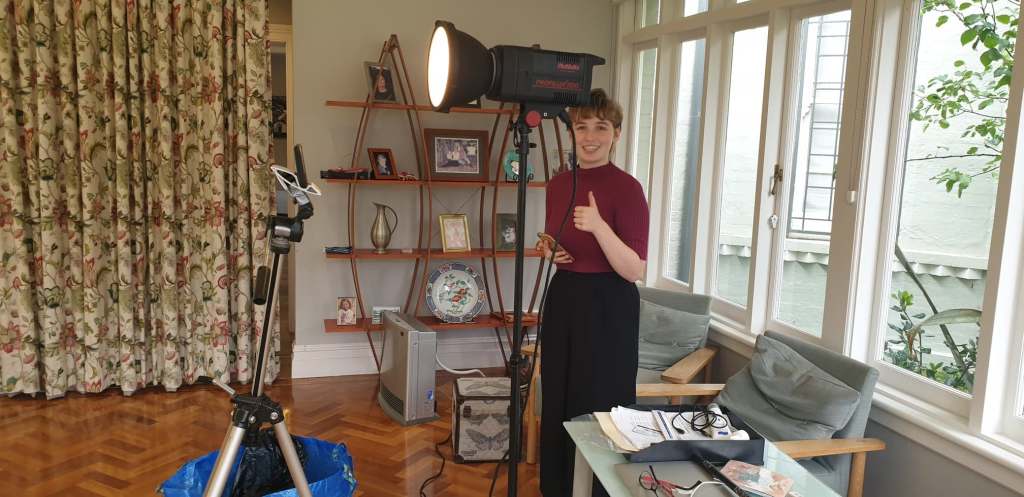
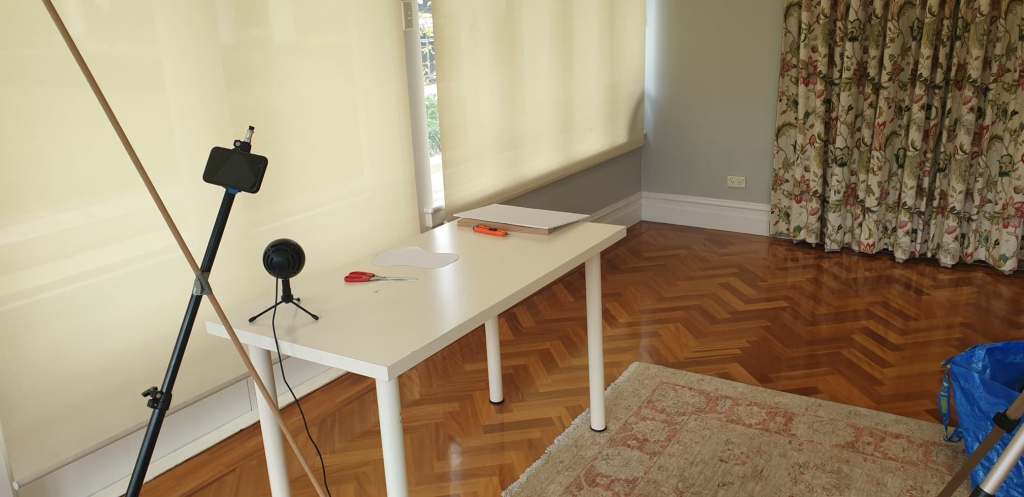
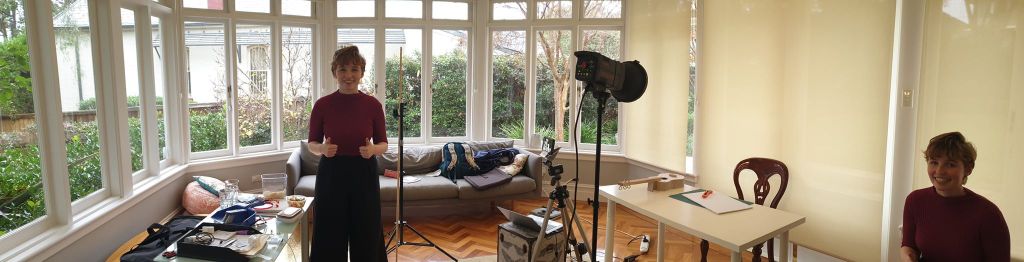
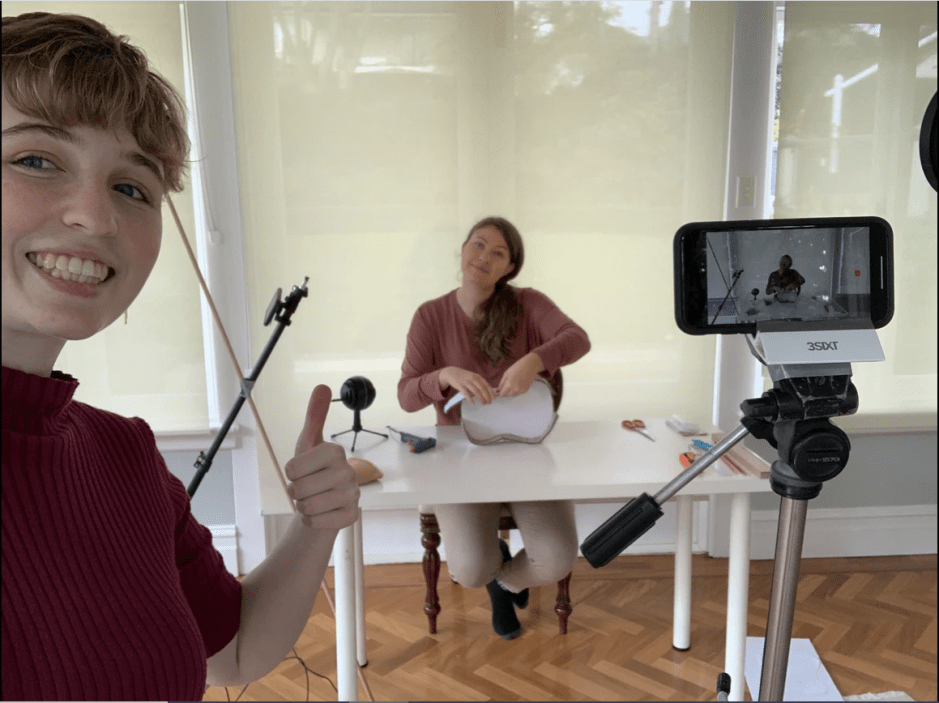
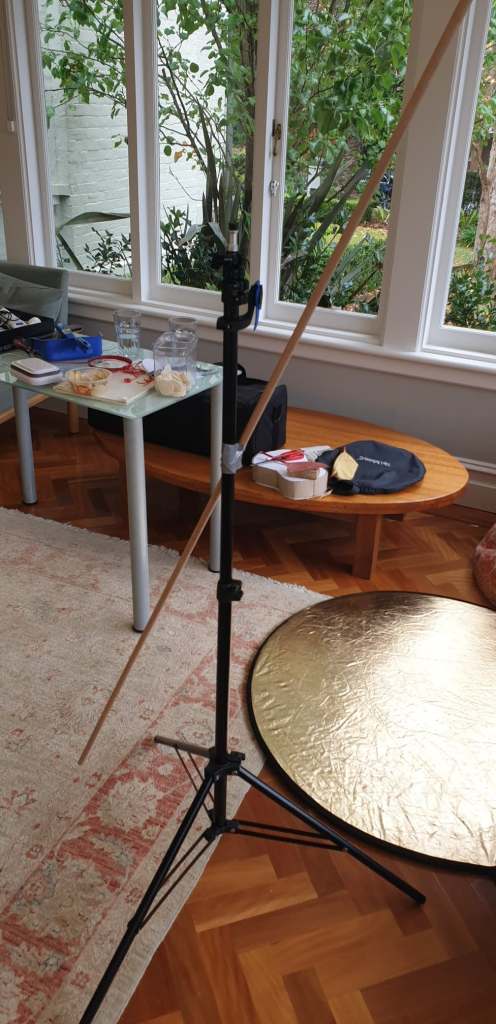
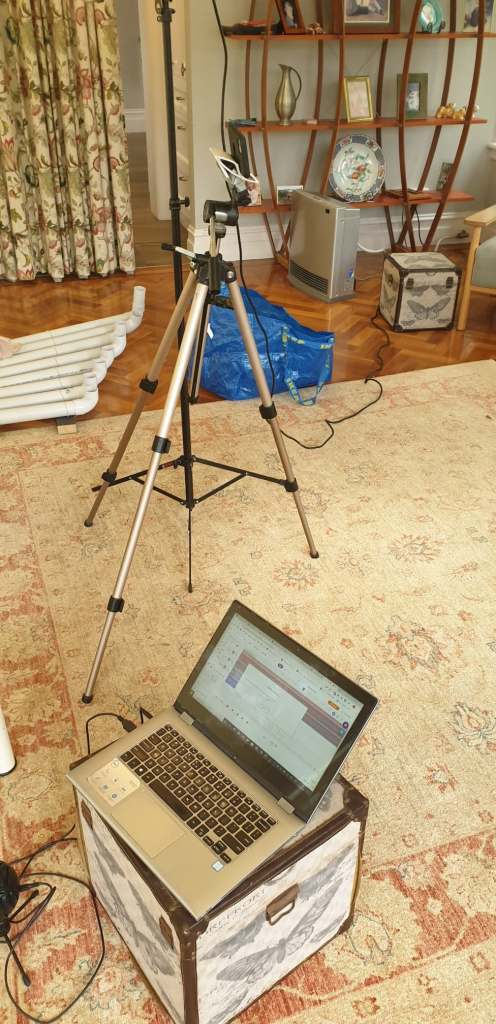
Lucy and I finally made plans to get together and try and do some filming for my ukulele tutorial video. She made sure to set up a room at her place just for the recording with all the necessary equipment. Even though we didn’t have proper recording cameras, we ended up using the newest Iphones which, in my uneducated opinion, did as good of a job! Lucy ended up putting up two tripods so we have a choice between two angles when shooting – one for full body and one for a close-up look. You can read more about the details behind the set-up on Lucy’s blog here!

One thing that I needed to do in terms of preparing for the shoot was cutting up all the pieces for the ukulele so I don’t have to do it while we’re recording. I thought it was really amusing that when I told Lucy about how worried I am for maybe not having enough time to prepare everything, she was wondering why would cutting up a few pieces take so long haha. Weeeell unfortunately there was quite a few, specifically, there was 72 pieces + 2 parts for the ukulele body that I needed to cut from cardboard and foamcore. And let me tell you, it really takes forever 😅. Thankfully, other assignments didn’t take too long to finish so I got to cutting. I also had to make sure to write out all the written instructions which would also serve as step-by-step process on how we were going to record it. After everything was ready and the necessary materials were prepared, I met Lucy at her place at about 9 am and we very quickly got to recording! However, we made sure to also set up a audio recorder so we can use it later on when editing the video. I used the trusty Blue Snowball microphone which has honestly been an amazing asset to many of my projects this semester! And we’ve used Soundtrap for the audio recorded. I used to be an Audacity girl but man, Soundtrap is so easy to use and the interface is incredibly user friendly. Who would’ve thought, all these skills we learned in TME actually came in handy 😁.

This is how the whole set-up ended up looking:

The whole recording process took about 5 hours which was incredibly fast considering that I was preparing for a 9 hour shoot haha 😅. To be fair, I’ve never had to be part of organising a recording session so I was preparing for the worst.

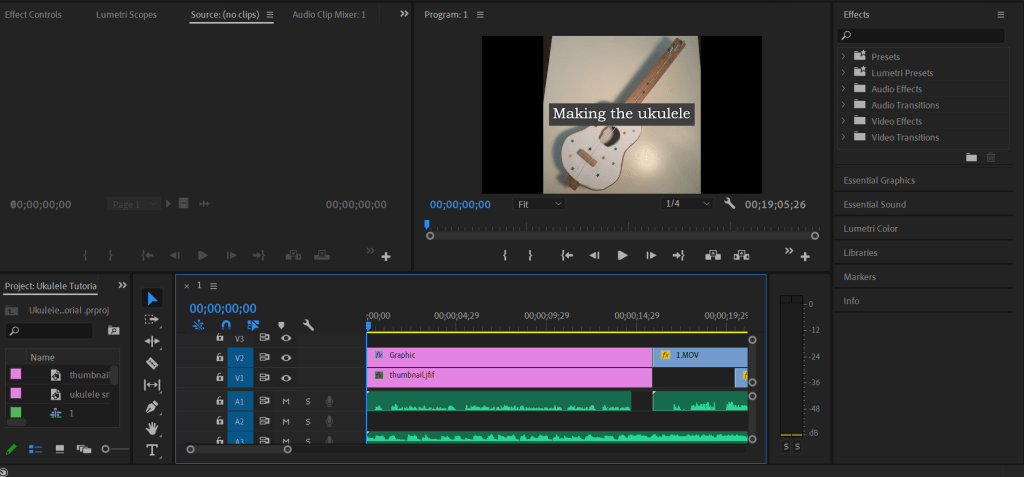
Once the recording was done, Lucy made sure to label each scene and then transfer it to a usb stick. This is where the fun part came – video editing (again, TME unit really did come in handy 😏). I decided to use Premiere Pro as it basically has everything you can imagine and University of Sydney was still letting us use the free cloud version. And I was planning on making use of the free stuff as much as possible. However, as I began recording, my poor little Dell Inspiron laptop couldn’t handle the extra data of HD videos and effects I was trying to apply to scene transitions that it became almost impossible to edit. Thankfully, my husband (coming to the rescue again!) has a proper computer so I made sure to thank him profusely and use it for a few days while trying to edit the videos. This is how my whole set up ended up looking (after about 3 hours of downloading Premiere Pro onto his computer 😅:

I’ve tried to expand on the few skills that James has taught us by utilising more graphics and some scene change effects. I also tried to put some background music and adjusting the volume on the spoken audio to be louder than the generic ukulele music playing throughout the video haha. However, the longest part of the editing was recording a voice over and trying to have it match with the footage in the video. This is why you can tell in the final product that I was speaking through the shoots. Unfortunately, Lucy and I had some problems with our audio files so I needed to make sure that the audio was sounding tight 👍.

Two days and many technological problems later, I finished my edit and managed to upload it to Youtube relatively quickly (thank you NBN!). This is how the final product looks:

And that is the summary of all the behind the scene things that happened in order for the website to go live! It was a long process and it took a lot to get it organised but thankfully it all came out well in the end! 😊😊😊😊

Week 13: Robot voices and cellos

This week’s lecture featured the amazing Ethan Hein and oh boy was my mind exploding by the end of the session! 🤯 And I’ll just preface this post by saying that yes, we were discussing Abletone Live and yes, I felt like a fish out of water. Sooo I’m sorry but I unfortunately won’t be able to demonstrate a lot of these techniques that Ethan talked about during the lecture. However, I will make sure to list them for those who may be more familiar with Abletone Live. I have actually complained about my lack of understanding of the program to James and thankfully, after he told me that he ended up just paying for a proper course in order to learn how to use the program, I felt muuuch better. Another student in our class mentioned how he ended up just going through the 4 hour tutorial in order to learn the basics so yes, I wasn’t going to lose sleep over not fully understanding what Ethan was telling us to try out 😅. Nonetheless, he still managed to inspire in me a desire to go and learn how to use Abletone Live and maybe venture more into the world of mash-ups, EDM and general music producing. It really feels like my whole Abletone Live experience was one long journey of self-discovery and if you read my earlier posts, you will see why.

Anyways, before I dwell deeper into the lecturer content, here is a snippet of Ethan’s bio, which btw you can find on his blog site here:

Ethan Hein is a Doctoral Fellow in music education at New York University, and an adjunct professor of music technology at NYU and Montclair State University. As a founding member of the NYU Music Experience Design Lab, Ethan has taken a leadership role in the development of online tools for music learning and expression, most notably the Groove Pizza. Together with Will Kuhn, he is the co-author of Electronic Music School: Empowering Student Creativity with Ableton Live, forthcoming from Oxford University Press.

Yes, very impressive indeed. And also, I must have completely forgotten or just never realised but he has developed Groove Pizza, an incredible online learning tool which teachers can use in many creative ways when wanting to teach/play around with drum beats! An app that is definitely worth exploring so check it out!

Going back to the lecturer, Ethan decided to dive straight into some demonstrations and he began by showing us the Vocoder feature in Abletone Live. I personally was not aware of what that was or what it did and in case you are not either, here are some artists who have used it in their music:

Wikipedia (and Ethan) described vocoder as “a category of voice codec that analyzes and synthesizes the human voice signal for audio data compression, multiplexing, voice encryption or voice transformation. The vocoder was invented in 1938 by Homer Dudley at Bell Labs as a means of synthesizing human speech.” Ethan was showing us some tips and tricks on using this feature through some of the Micheal Jackson samples he had ready in his library. The interesting thing about the Abletone vocoder is that it’s not really an audio effect but a synthesizer effect. Unfortunately, I didn’t quite understand this part until Ethan demonstrated on his midi keyboard that he was able to play the modified sample. I still don’t quite understand how that works or how it would be practically applied to music producing but it was definitely a very cool trick 😁.

There were also a few more features that Ethan ended up talking about like warp modes where you can slow down the digital audio. He also mentioned a way of cutting sounds, like drum beats, and having digital audio blackout which can create some very interesting mixes.

However, even though I was struggling through most of the lecture in terms of the technical aspects, it was amazing to hear Ethan’s insight into a number of different topics. He briefly reflected on a past client for whom he ended up producing a country rock album. The problem was that the client wasn’t a very good musician which meant that it took a lot of effects and splicing/cutting in order to make this album sound passable. Ethan concluded the story by saying that as musicians, we need these people in our lives because we still need to earn money. Personally, I’ve thought about this quite often and as violin teacher, many times I feel as if there is only so much I can do for a student who is struggling with the material or in many cases, not even trying. Of course, I will do my best but sometimes I wonder if I were a more established music tutor, would I accept every student that comes my way? It’s hard for me to answer that question but it’s definitely an interesting thought experiment worth examining.

Another interesting point that Ethan brought up was in regards to the way reverb connects to mic-ing different instruments, especially classical instruments. He mentioned the example from The Beatles who were known to experiment in the studio with different effects and recording techniques. During the recording of Eleanor Rigby, Paul McCartney specifically asked for a condenser mic to be put close to the cello f hole; a very unusual practice as classical instruments are usually mic-ed from a distance in order to hear the most out of the instruments’ natural reverb. However, by putting the mic so close, the sound becomes rather harsh and a little more aggressive. Yet, in the context of the song, it ends up working out really good. Such experimentation with sound production can definitely lead to a discovery of new effects so thinking outside the box on certain occasions is definitely a good mindset to hone. Have a listen to Eleanor Rigby and see whether you can notice any differences with the cello sound:

The last thing that I really felt resonated with me was Ethan’s musing on the pop genre’s status in today’s music scene. From a classically trained musician’s perspective, I have to admit to having a certain degree of disdain towards most music which is dominating the music charts. Even so, when Ethan went into details about the intricacies behind music production and all the different innovative ways sounds are being produced, I ended up finding a new respect and appreciation for pop music. I felt my perspective changing especially when he mentioned how in order to have very complex sound production and soundscaping, something’s got to give and in most mass-produced music it will be the harmonic and melodic complexity. This is to ensure the music itself doesn’t sound too busy and overwhelming. So in the end, when we traditional musicians complain about the simplicity oftentimes encountered in popular music, it is really only our untrained ears speaking for us. What we don’t realise is that there is still plenty of complex musical processes but they are not always evident. Thus, it could be safe to say that creating any kind of music is never an easy process and as a future music teacher, I need to make sure to remember that when teaching certain attitudes and values to my students.

Overall, the lecture was extremely enlightening and I thoroughly enjoyed participating in this invigorating class lecture and discussion. What a good way to end a unit that thoroughly surprised me and taught me so much about my own journey as a musician. However, this is not the end. Maybe it’s the end to these particular blog posts, but not to my continues desire to learn more.

I will definitely try to continue using this platform for many other discoveries and pathways I undertake during my teaching and musical career so continue to stay tuned and keep on technologicking! 😊

Extra resources

*Make sure to check out Lucy’s blog where she goes into more details about making the website and the Facebook page!*

Once Lucy and I have finished building our instruments, it was time to create all the resources! Lucy has already began creating a website for our instruments by using Wix as the domain. We have contemplated on maybe trying Square Space but it wasn’t free and as poor students, all we want is free stuff haha! 😅 So instead we opted for Wix as Lucy was quite familiar with it already and personally, I liked the design choices it had to offer more than WordPress (yes I know, where is my loyalty??). I have gotten to editing the page a little later in the game but there were a few things that I needed to make sure was done.

The two main pages which I tried to write out were the Cross-curricular and Safety pages. For the first one, I made sure to go trough the English, Mathematics and Science NSW syllabus for stages 3 and 4 and find some connections across different subjects. Even though I knew that there was definitely some overlaps, the more I read through these documents, the more I realised [WARNING getting philosophical] how useful hands-on projects could be for education. Just drawing from my own experience of creating and building instruments, I can tell that the benefits are immense. The students get the opportunity to apply knowledge they might be learning in the classroom. They may get opportunities to work in groups and learn proper communication skills. They can build projects on top of projects but most importantly, the sense of pride and achievement makes all the extra effort worth it! I can definitely attest to this :D.

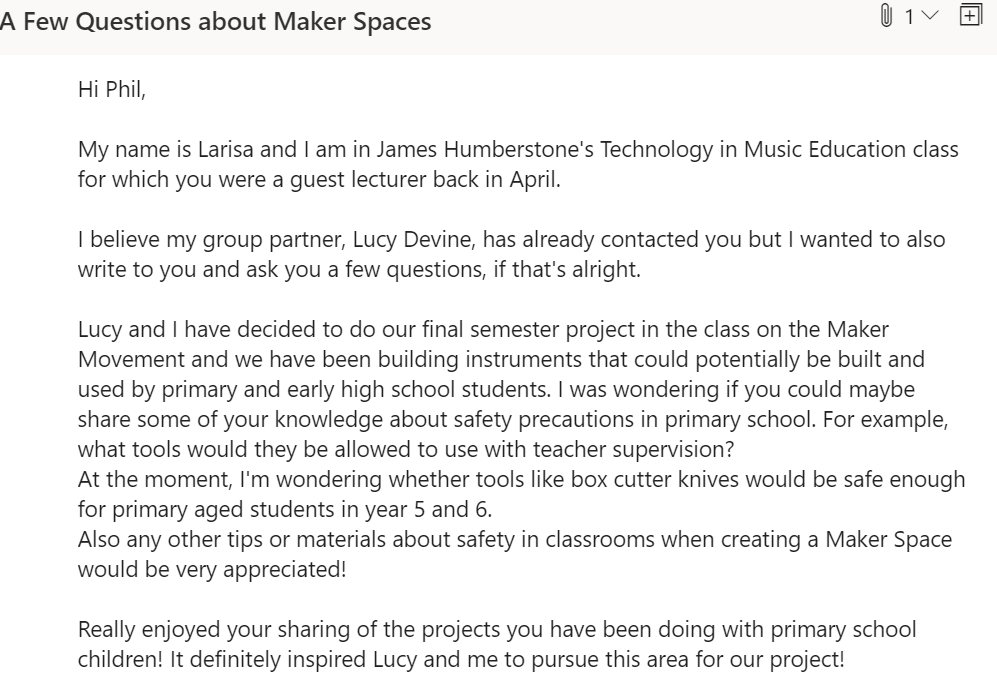
The second page I made sure to prepare was the one on safety. This was something that Lucy and I definitely wanted to include as the instruments we were designing were always meant to be built by students. Unfortunately, this was a forethought for the most of the project so only when we putting in the final touches to the website did we realise that we haven’t properly addressed safety steps for teachers wanting to implement our resources. I suggested to Lucy to try and contact Phil Nanlohy, the guest lecturer from when we discussed the Maker Movement in class. This was my email to him:

Phil was absolutely amazing and answered back so quickly with many interesting points. However, because there were too many to write down, he actually suggested to have a Zoom meeting with both Lucy and I and answer any questions that we might have! I couldn’t believe he was willing to share some of his time and incredible experience with two students. Both Lucy and I were incredibly grateful and made sure to ask as many questions as we could in order to make sure that our resources on safety were correct and applicable.

There were quite a few tips that Phil pointed out during our meeting, some of them being extremely helpful when needing to decide what tools to use in a classroom setting. Here are a few pointers that I have managed to jot down during our meeting:

  1. The students can’t just grab materials. They need to be properly prepared and organised before any building is undertaken in the Maker Space
  2. The projects need to be broken into smaller steps and processes.
  3. All materials that are being cut by the students need to be secured by tools such as clamps in order to avoid further injuries.
  4. A substitute to a box cutter knife (as they can be quite dangerous for students to use) could be a scissor-like tool from a brand called FISKERS. You can check them out here!
  5. Make sure that each project has at least two students working on it.

After the meeting, Phil sent out an email to Lucy and me with written down instructions and rules. Because they were so detailed and effective, we decided to credit it and put it down on our Safety page on our website. However, hopefully Lucy and I will be able to have some of our own experiences to share in the future! 😊

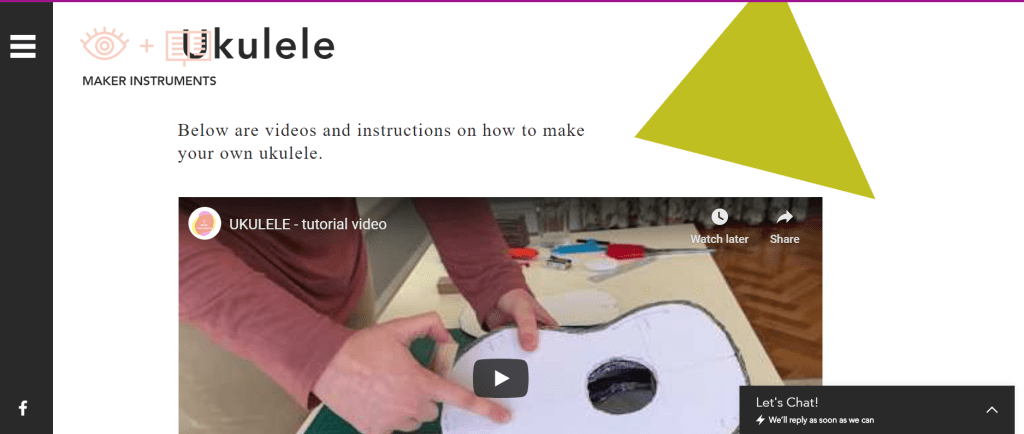
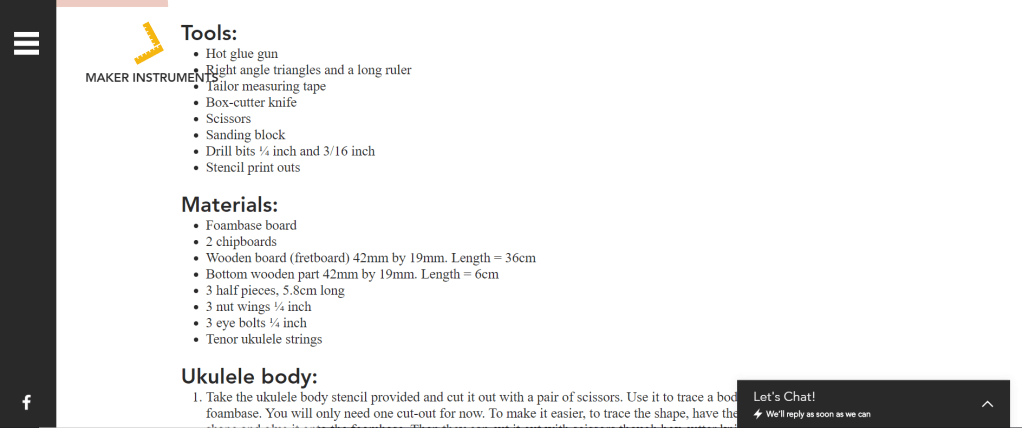
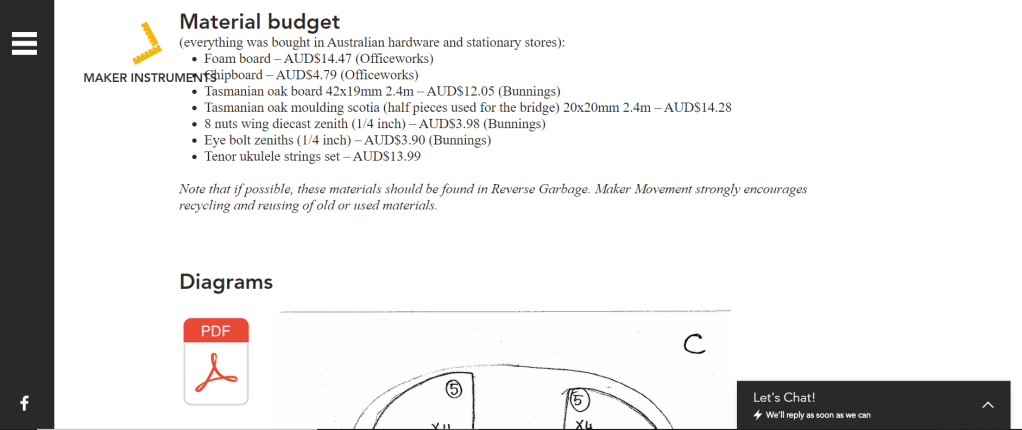
A few other parts of the website that I made sure to finish were some of the repertoire arrangements. Lucy and I have also worked tirelessly to edit our tutorial videos and write down step-by-step process of making the instrument. I also needed to provide stencils for the ukulele so I made sure to draw them out and present them in a PDF form which then can be printed out and used directly. This is how my ukulele tutorial page ended up looking:

You will notice that there is also a budget list which of course will vary from person to person, especially if Reversed Garbage method is used. However, it still provides the website visitor with enough information on how budgeting might look if they wanted to try it themselves, or better yet, if teachers wanted to test it out in their classrooms.

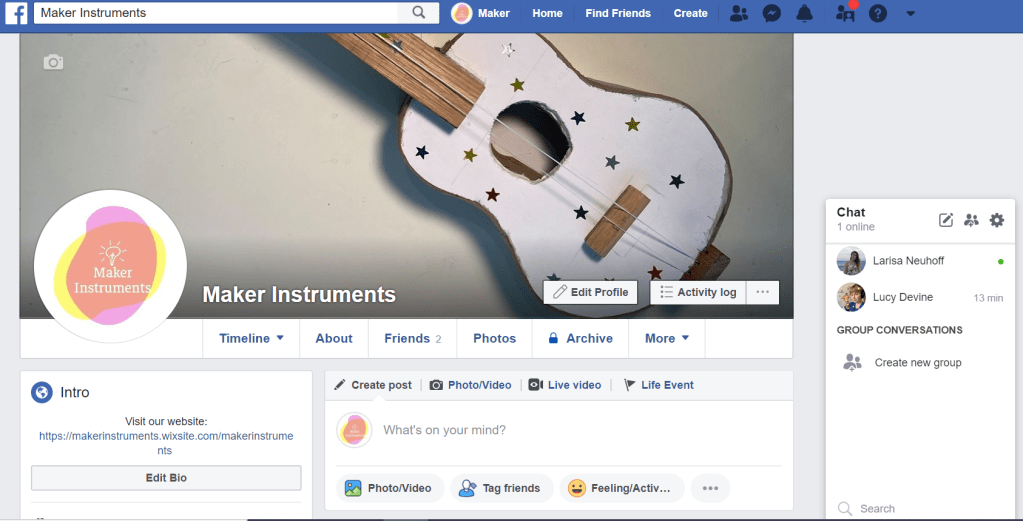
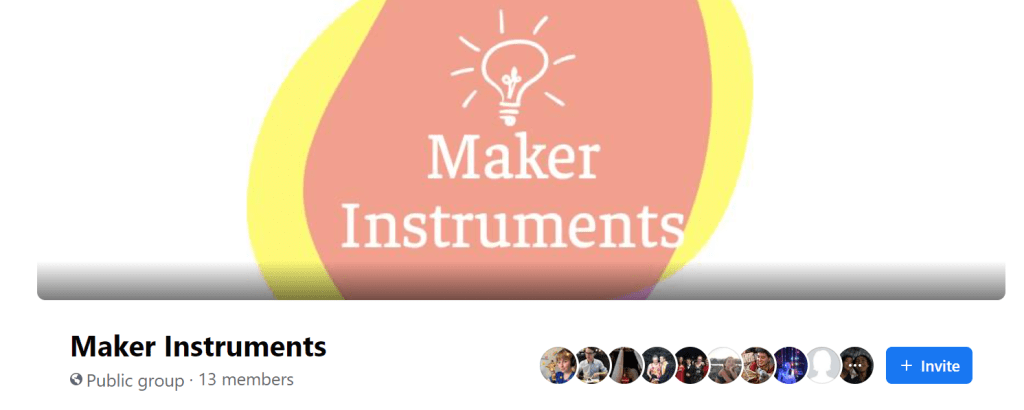
Next thing that Lucy has also started was a Facebook page for the purpose of not only sharing all of our projects but also of other people/students potentially sharing attempts of making our instruments. The space could also evolve to something bigger (one could even say a movement 😉) where group members could share their own ideas and designs about instrument making. This is how the page looks like:

We have already shared a few videos from our Youtube page with the group but mostly left it alone for a few weeks while we were trying to finish our website. However, today I decided to share the group with a few family members and Music Education peers. And the group already has 13 members! Woo! If you’re reading this post and you happen to not be a member, join now, enjoy and share the love for making instruments! 😊

In the next post I will discuss the filming and photo shoot process that Lucy and I undertook for creating all the tutorial videos and website photos so stay tuned! 😀

It’s the year of ukuleling 🪕

If you have seen some of my older posts, you would’ve noticed that I have taken to learning how to play the ukulele. And because I have been so excited to learn another instrument, my decision on what to build for Lucy and mine’s TME project was very clear. Of course it was going to be a ukulele!

I didn’t, however, choose the ukulele JUST because. There were a few reasons for it:

  1. It had a small enough body and shape which would be easily made out of everyday materials
  2. I (kinda) knew how to play it

As I’ve talked about it in my previous post, I have managed to find two designs which were an inspiration on what I was about to do next. I knew that if I wanted to have a functional instrument, I had to use real ukulele/guitar strings. But I was also aware that if I wanted to avoid using any dangerous power tools, I had to make sure the materials were bendable and easy to cut with scissors. One part of the ukulele that I was ready to copy from the cigar box guitar was the fret board. I thought that using a wooden plank of some sort with proper screws and bolts would provide the necessary stability the strings needed. Creating a fret board out of any material which wasn’t solid would’ve not work properly. To be fair, there might be a way to create a fret out of softer materials but I didn’t have time to try and figure that one out. Future project maybe?

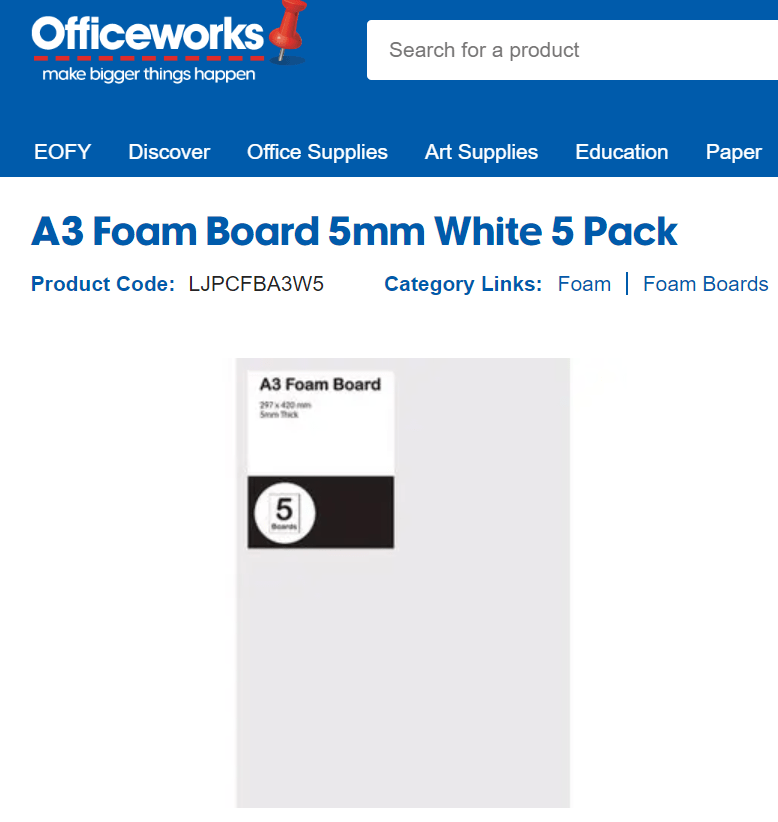
Cardboard, unfortunately, was out of the question,. I very quickly found that it was too soft and it wouldn’t be able to withstand the tension and pressure of the strings. Lucy suggested to maybe try and look at materials like foam core. I’ve taken it into consideration while making a list of possible materials to buy and then it was off to Officeworks. I did end up finding a foam core board which seemed relatively sturdy:

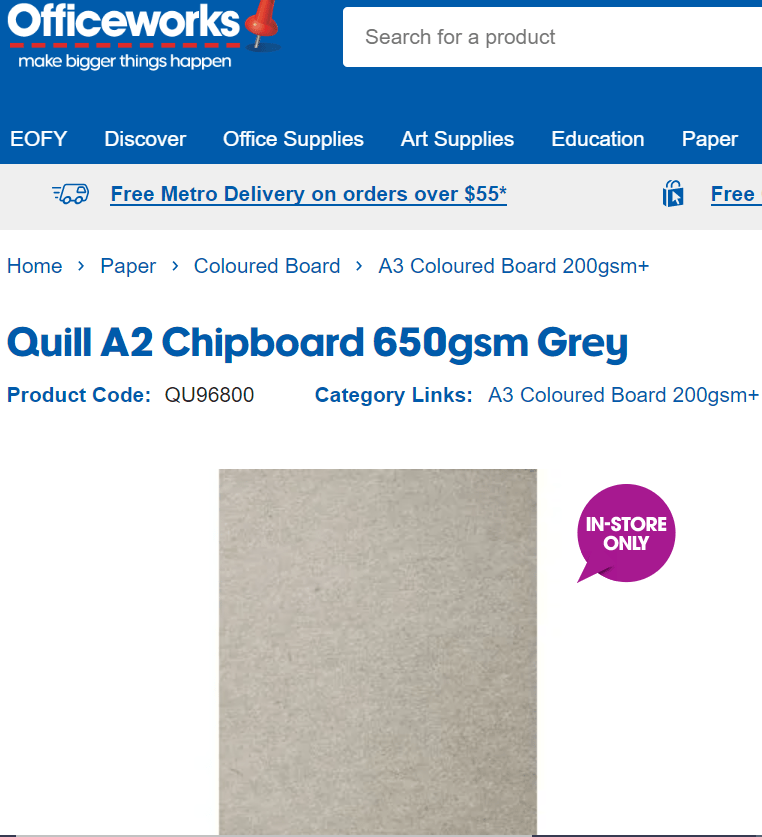
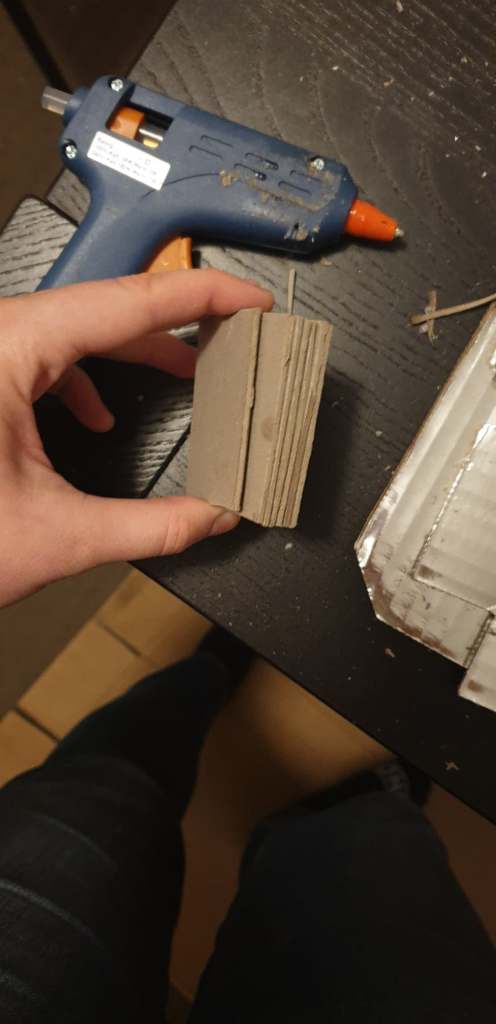
However, I wasn’t convinced that foam core was going to be the best choice for the whole body of the ukulele. So I began searching for a material like cardboard, but slightly harder. And thankfully Officeworks, the magical place that it is, rescued me by providing me with some grey chipboards:

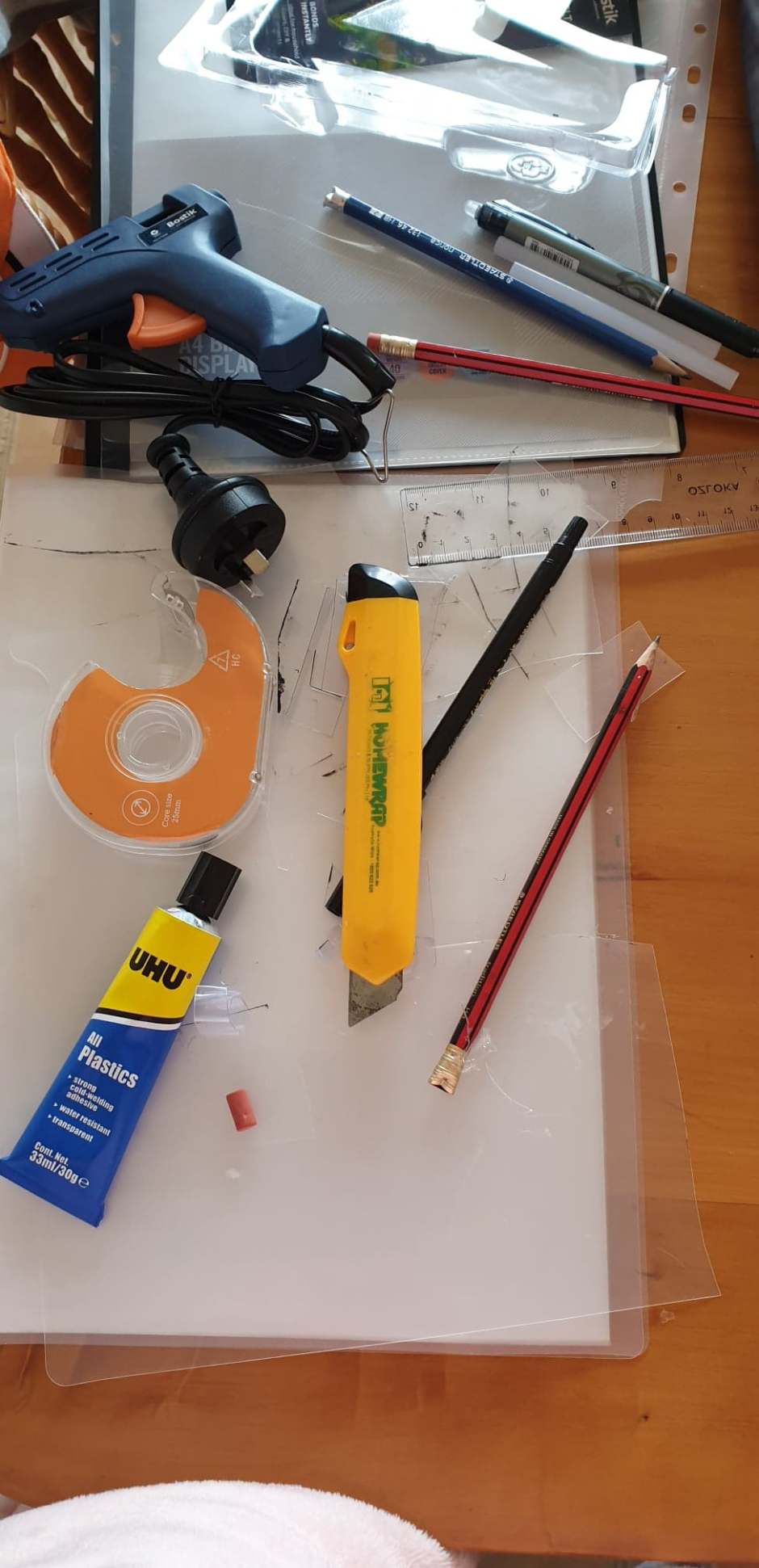
I also ended up buying some hot glue and a few cutting tools, like a box cutter knife! I was pretty happy with my purchase so I paid for the materials and went off to Bunnings to buy some freboards!

For the fret, I was trying to follow the instructions from a written tutorial on how to make a cigar box guitar found on the Instructables website here. If I had more time, I would’ve tried to come up with a better design for the string holes but for now, this needed to do. I ended up finding a wooden board that was the right dimensions to make the fret comfortable enough to hold. The board was over 2m long but this wasn’t a big issue as I was able to get it cut in the hardware store. Unfortunately, I didn’t know what dimensions I needed so I got myself a small handsaw which was also safe enough to use by younger students. I also ended up getting some eye bolts, nuts and drill bits and that was it for my whole shopping day.

This whole preparation took place a week before I was ready to make the instrument. However, once I decided on what dimensions might work for the fret board, I got to cutting (or better said, my husband got to cutting):

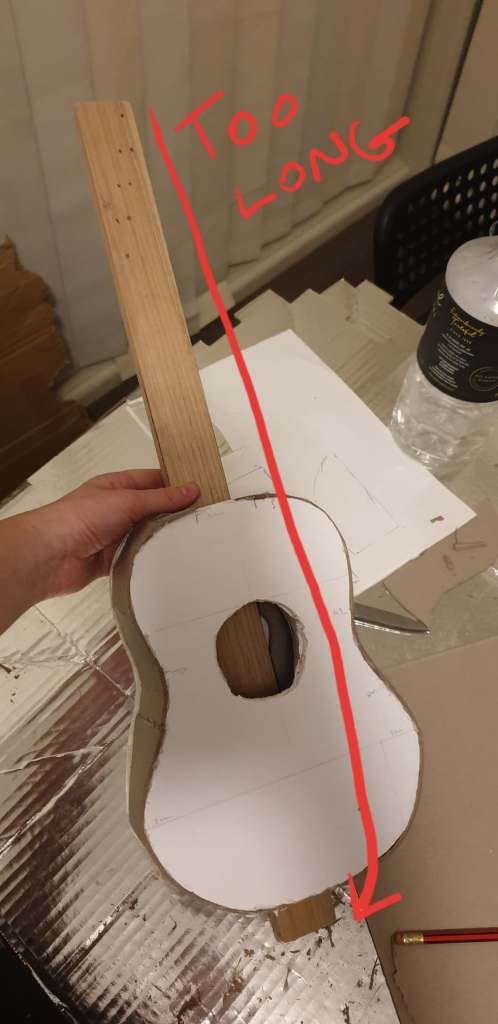
But oh boy, the fun part is only about to come because once I decided to finally attempt to build this ukulele, I still wasn’t sure how it was all going to work. One thing I had certain, other than the fret, was that I wanted the top and bottom part of the instrument to be foam core as it was easy to cut. I decided to trace my ukulele, Rosie, onto the foam core board but soon realised that the actual shape might be too long.

This is how the ukulele looked towards the end of the whole building process.

The holes on the fret would be too far from the bottom part so I needed to try and shave off some length from the bottom part. I ended up using a compass and protractor to help me measure out the angles I needed in order for the shape to be even.

Next thing I needed to do was cut out the shape out of foam core. I also decided to use chipboard for the sides of the body as it was bendable enough while still maintaining a sturdy structure. This is how it ended up looking in the end:

I decided to cut the top and bottom for the ukulele but once I started assembling the body, I realised I needed to trace the ukulele for the bottom part. The chipboard created an uneven shape and the foam core part also needed to be slightly bigger than the top in order to cover the chipboard like so:

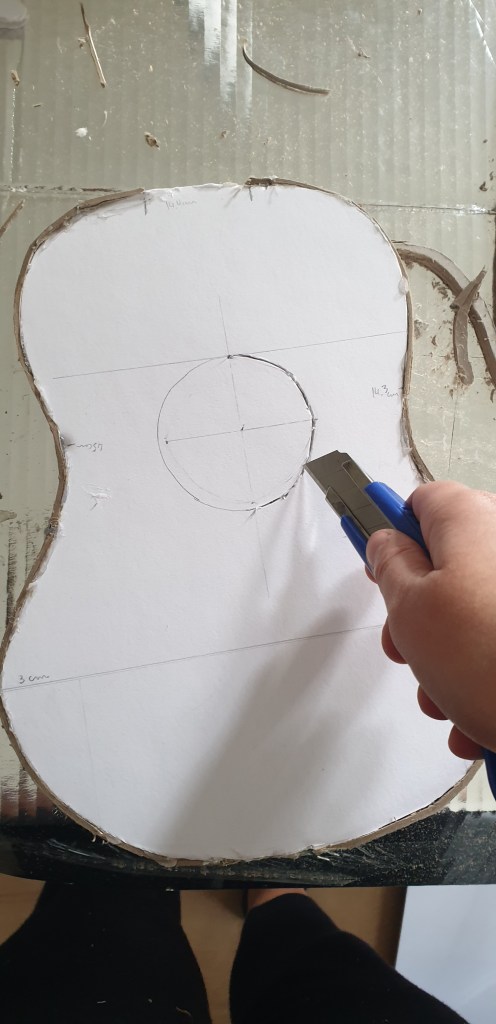
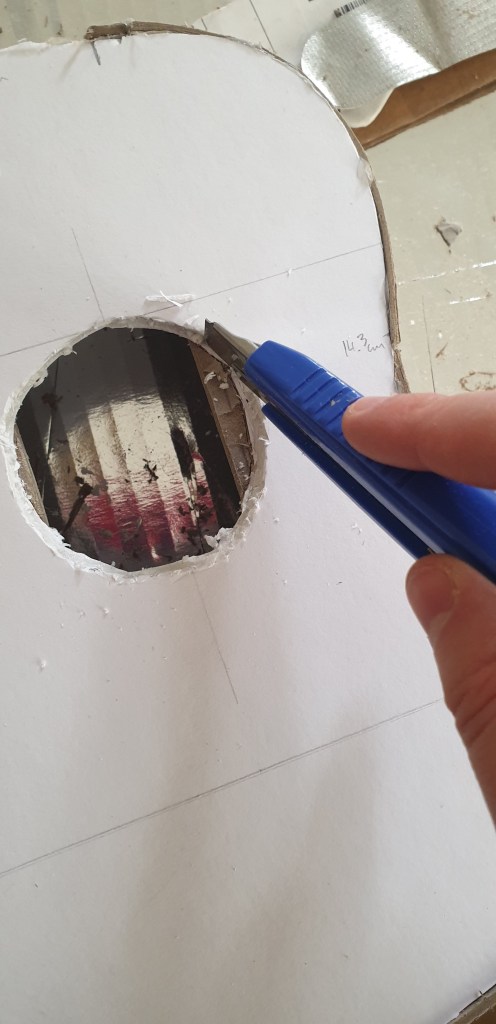
Once I had the main body figured out, I realised that I also needed a hole on the top part. I tried to use the measurements of Rosie. When I was first trying to draw the circle, I didn’t actually have a compass (the tweaking of the ukulele body length was done later on) so I looked for a circular object which had an approximate diameter of 6 cm. Once I traced it on, I ended up cutting the hole with a box cutter knife.

I also sanded off the hole with a makeshift sander (read: a foot filer part that I broke off of a foot filer).

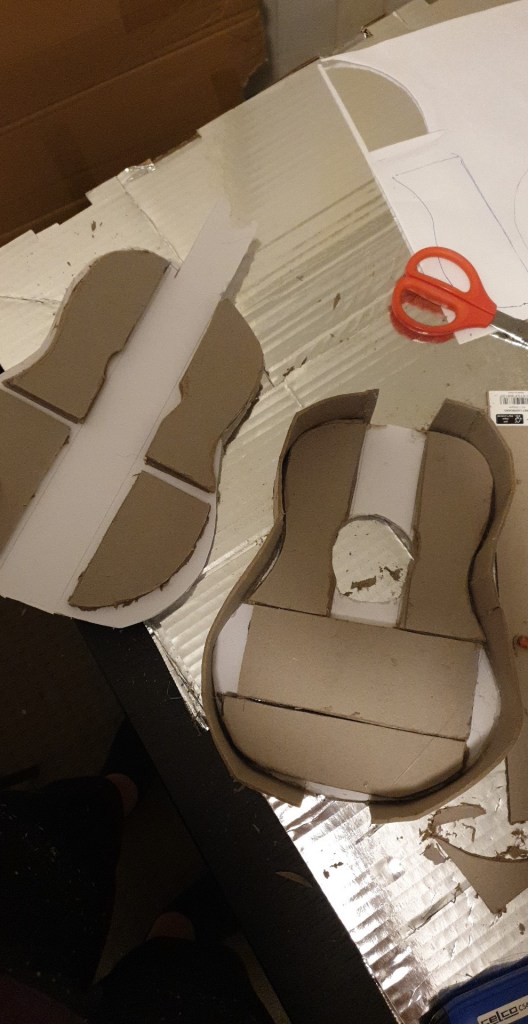
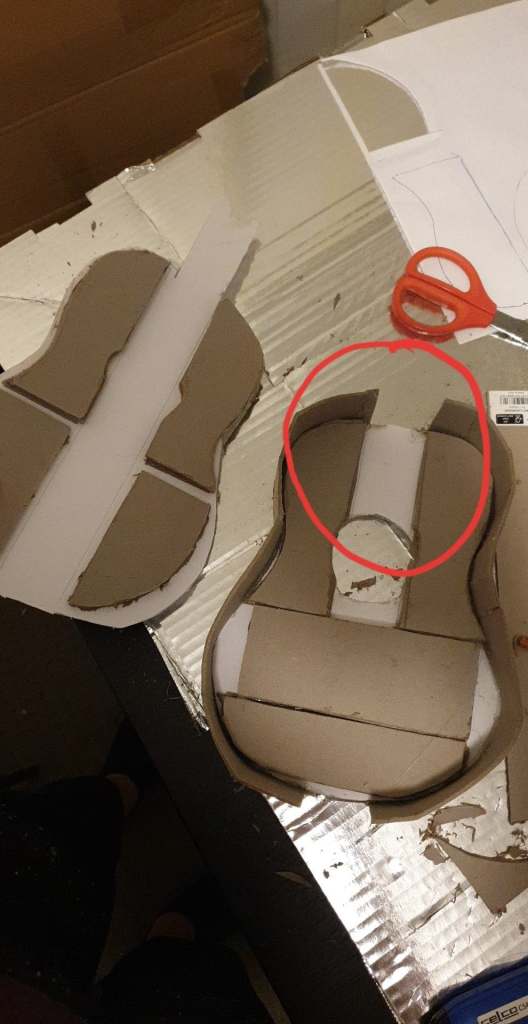
I was about to glue the body together but I was still worried that it won’t be sturdy enough for when the fret goes on top. However, while I was re-watching the cardboard guitar video, I noticed that the design included small parts on top of the top part which provided extra structure. I decided to do the same except on both the top and bottom parts.

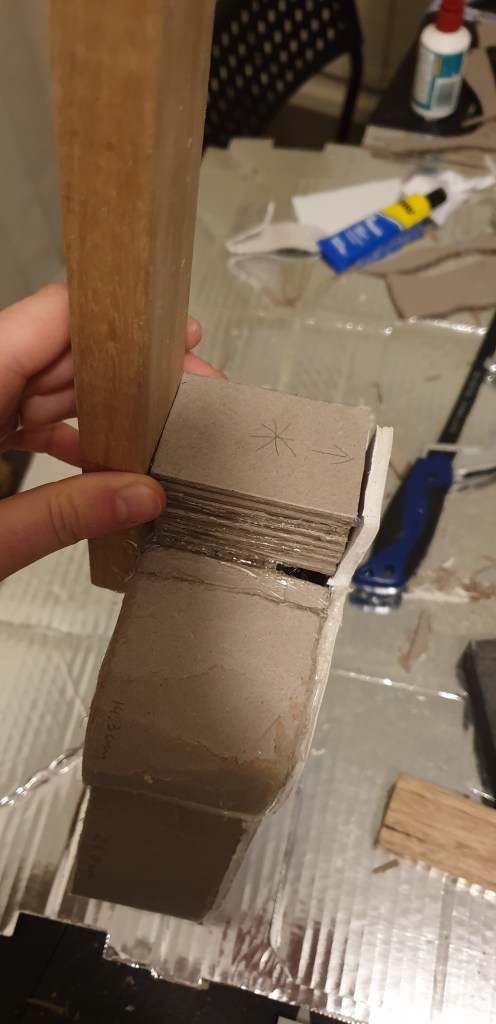
The shape of the parts didn’t matter as long as it covered the area I needed covered. As you can see from the picture above, however, the right body part had the top with no reinforcement which would prove problematic for the fret. Originally I thought of sliding the fret inside the hollow body (which you can see in the picture at the beginning of this post) but I soon realised that wasn’t going to work really well as the glue wouldn’t be able to hold it properly. So what I did instead was cut small rectangles to cover the bare area which ended up providing further support for the fret.

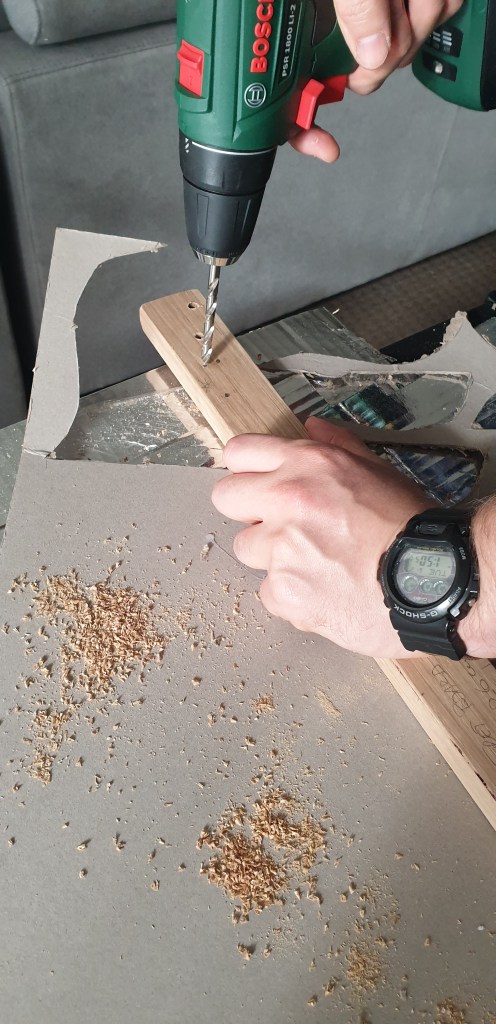
Once I was sure that the body was well reinforced, I glued the top and bottom parts together and glued the fret on top of it, but not before I drilled some holes, again with the help from my dear husband.

The holes’ measurements were taken from the cigar box guitar tutorial.

I wanted to have four strings but I couldn’t find a way to fit them all. This is something that I would like to explore further if I have the time to come back to the design.

In the end, the ukulele became three-stringed and that was fine! It would still be able to play chords but I just needed to figure out how.

However, my journey towards finishing building this instrument wasn’t over yet as I needed to actually put the strings on. I decided to leave it on for the next day as I was a little scarred of it all falling apart. 😬 THANKFULLY, once I gathered the courage, put one string on and made sure to tighten it with the eye bolt screw, it actually WORKED!!!🎉🎉🎉 I couldn’t believe it!

This is how the final product ended up looking:

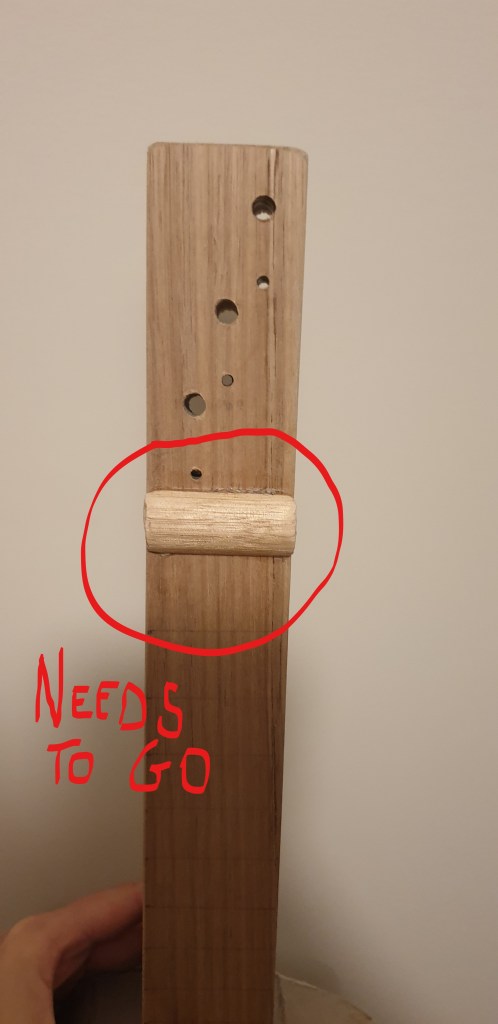
There were a few things that I needed to add in order for the string to produce a proper sound. As you can see, I used half parts, cut them up into 6cm length pieces and stacked 3 of them on top. I had to experiment with how many I needed as I originally started with only 1 which didn’t provide enough stretch and tension for the string. The second part I added to the ukulele was at the top of the fret which I cut to match the width of the fret. At first I thought I needed it but I soon discovered that the pitch difference between the open string and playing first finger close to the nut was a minor 3rd. In order to make the pitch difference a semitone which you would find on any ukulele/guitar, I needed to take out the little bridge part.

Thankfully, once I’ve made those little adjustments, the ukulele was working great! However, I was still worried about the stability of the fret so I went back to my ukulele Rosie and tried to study where the reinforcement for the came from. I noticed the little bulge around the bottom so I tried to recreate it on my makeshift ukulele. This seemed to really do the trick!

Finally, I was happy with the design and decided to finish off there. 🙂 Even so, there were still a few design issues that I wanted to try and improve on for the future:

  1. I wanted to test out the possibility of 4 strings
  2. I needed to try and test out how the fret markings will work and where
  3. I needed to find a better bottom piece of the fret than the one I had as that one was too short and would easily snap off once I tried to put on the third string.
The whole piece was about 6cm long which I found to be too short. My future project will be to try and figure out a better way to tie the strings on the bottom.

Overall, it was a long process, riddled with problems and worries but also extremely awarding and exciting! It has been a long time since I felt so proud and accomplished with something I’ve built and it further reminded me and affirmed to me that this project that Lucy and I were undertaking has the potential to bring enormous value to students’ learning experiences.

If you would like to check out how the ukulele sounds when played, check out Lucy and mine Youtube channel which has all of our instruments on it! 😀 I will discuss how we came to build the resources for our instruments in the next post but until then, enjoy the instrument show haha 😁

🎵Another brick in the (impenetrable) wall 🎵

A few weeks after Lucy and I have decided on the specifics of our TME project, I took a break. Not completely because I still tried to help out with some of the research into the specifics of our instruments but unfortunately, there were other assignments to finish and I needed to put the fun stuff like building instruments on a side, at least for now.

However, time was ticking and the five weeks we had from the moment we decided to begin our project has soon turned to 4. Then 3. And if I’m being honest, I wasn’t anywhere closer to coming up with an effective design for a string instrument. My only idea that I kept at the back of my mind was the Echo Cello designed by Jon Madin. Unfortunately, there were several problems with trying to recreate an instrument like that:

  1. It wasn’t my design
  2. Even if I modified it in some ways, it would still be too complicated for primary school children
  3. I didn’t have the time to come up with an easier way to build a similar instrument which was quite sophisticated in its conception even though it was super easy to play

So when Lucy asked me if I was closer to coming up with a design, I had to say no, no I wasn’t. I have hit the wall, and unfortunately it had nothing to do with Pink Floyd.

This point in my research always seems to happen. Usually when I have to come up with original projects, there is the initial excitement where I’m overflowing with ideas, then the motivation to research about it as much as possible and then, somewhere in the middle, BAM! I’m hitting the wall, head first. And this period is not pleasant. As I’ve already mentioned, I was running out of time (or at least it felt like that). Originally, I wanted to come up with a design early on so I have plenty of time to build the instrument and test it out. Yet, at this point, things were looking tight so I needed to be efficient.

So the intensive research began. I began considering even changing the instrument type to make my job easier. However, the more I looked at different home-made instruments, the more I was getting overwhelmed. I really, really didn’t want to try thinking up a new design from scratch but I also didn’t want to copy an already existing one either. So I kept on going back to Linsey Pollak and to Jon Madin for inspiration. I’ve also gone to Youtube and started typing-in generic search terms like ‘Homemade Instruments’ and ‘DIY instruments’. I did find this video which was quite impressive:

Sadly, I quickly realised two things: these designs wouldn’t be doable for younger students to make in the classroom. And for a day, this realisation hit me hard to the point where I was regretting even going into this project. What was I thinking, trying to build an instrument in such a short amount of time without any previous knowledge??

But, let me tell you what happens after I hit a wall (sometimes repeatedly). Eventually, if I stop and decide that I give up, I finally stop pushing and calm down. This is when I realise that I was able to walk around the wall this whole time! And that is exactly what happened! All my failed research led me to discovered DIY instruments that either included designs like these,

or something highly sophisticated like this.

There is nothing necessarily wrong with either of the two but there was definitely a gap for instruments which could be build by younger children while still giving them enough interest and challenge. And I wanted to bridge this gap! I have already decided to go for a ukulele/guitar type of an instrument after looking at different ‘How to build your own cigar box guitar’ tutorials but again, trying to come up with a design which is as challenging as it is simple seemed like an ultimate paradox. That is, until I came across this video:

For the first time since I began my research, I wasn’t able to find any DIY instrument projects that involved materials which didn’t require power tools. If I did, the design was quite simple (see above picture). However, this video showed an amazing looking guitar which was build entirely from cardboard. And then it all clicked! I saw the path around the wall and I began to run towards it! ‘What if I try and combine the design of the cardboard guitar with the design of the cigar box guitar??’ I asked myself. ‘It sounds crazy but it just might work!’ said I to me.

I ran the idea past Lucy and she was quite positive about the it! I also ran the idea past James, our lecturer, and though he loved the concept, his fear was that it might be a little too ambitious. I mean, coming up with a new guitar design in a few weeks did sound ambitious. And yet, I was finally back on track and excited to start creating again!

My instrument building journey was finally able to continue.

Image by JL G from Pixabay

And the research begins!

After our first video chat on Friday April 24th, Lucy and I have decided that it would be best if we split the research between the two of us. We have also slightly revised our plan of making one instrument out of every instrument group as unfortunately, there is only two of us and a limited amount of time. HOWEVER, as we are both super keen on continuing this project even after TME unit is done (😢), more instrument designing is definitely in the books for the future! Yet for now, we have settled on 3-4 solid instrument designs. We have also made a list of all the videos that we could find of people creating instruments.

I have decided to look at the string instrument group and possible percussion while Lucy was happy to look at the woodwind-type instruments. She has been absolutely amazing with her exploration and has put herself to work immediately. Here is her blog post detailing the whole process into more detail!

Both of us also decided that it would be wise to have a conversation with James, our lecturer, about the direction of this project. There were definitely a few points which we weren’t sure about such as, for example, whether to make the instrument designs aimed at primary or high school students. Likewise, we weren’t sure on the amount of work we were required to present as a two-person group so yes, James’ help was definitely needed!

We arranged a Zoom meeting with him the following Monday and unloaded everything that we were thinking of doing up to this point (sorry James!). Thankfully, James encouraged our enthusiasm and recommended a few things in order to make it easier for us. In terms of whether we should do our project for primary or high school students, he didn’t have a preference so Lucy and I made the executive decision of concentrating on primary aged children mostly due to time restrains. We were worried that with high school, we would need to have much more complex instrument designs. However, that did mean that we would have to avoid using any power tools if possible. With these placeholders established, I also suggested to James that maybe creating a ukulele (or something close to it) would be a good instrument to try and create (of course with no power tools). He felt that this might be a little too ambitious for the amount of time or people Lucy and I had. I heard what he said, I agreed, and then I decided to do it anyways haha. Sooo, I guess we’ll see if it worked (you’ll have to wait till the next post to find out 😉).

Unfortunately, I wasn’t able to fully dedicate myself to starting to build instruments this early on as I had other assignments to catch up to before I was able to get my hands dirty. Nonetheless, I thought it would be good to help Lucy with instrument designs inspirations so I got to work. Lucy has already sent me a video of a potential design from Alexandre Cellier’s Facebook page:

I thought the idea was fantastic, very creative and, most importantly, it gave me an angle to focus on: old designs meet wacky. And what would you know, there were already a few people in Australia who are well-known builders of instruments, especially instruments which are adapted for educational purposes. In fact, there were two specific builders who both came to Sydney Conservatorium to offer us Music Education students some very interesting and educational masterclasses. The first creator was Linsey Pollak who specialises in woodwind-type instruments out of garden materials such as a hose, watering can and more! This is what his website (go check it out, it’s amazing!) says about some of his current projects:

Since 1980 Linsey has also specialized in making musical instruments from various house and garden objects such as the garden hose panpipes, the watering can clarinet, rubber glove bagpipes, carrot flutes and carrot clarinets, chair flutes, broom clarinets etc. These instruments have featured in many of his shows such as Out of the Frying Pan, Knocking on Kevin’s Door, Playpen, The Art of Food, Making Jam, Passing Wind, Live and Loopy and Paper, Scissors …Rock! More recently he has designed hybrid wind instruments such as clarinis (narrow bore clarinets) made from aluminium, wood, bamboo and glass. There is also the Foonki which is a reed instrument which uses a plastic membrane (such as a garbage bag) as the reed which Linsey has been developing since 1999. Also, working with glass artisan Arnie Fuchs, Linsey has also developed glass bass clarinis such as Rosella and Mrs Curly (see below).”

The second creator that I was personally very interested in checking out was Jon Madin and his Wacky Instruments. His ingenuity left a huge impression on me about 3 years ago when he visited the Sydney Con. His instruments, unlike Linsey Pollak’s are more crazy and though the sound is not always great, it doesn’t matter because the whole point is to create wacky instruments which the students will have lots of fun playing! Here are some examples of them:

However, the reason why I wanted to specifically look at Madin’s designs is because of this instrument right here (start at 0:22 to about 1:50):

When I first tried playing on the Echo Cello, I thought the design was genius! It was fun, easy for primary school children to play on it almost immediately and most importantly, it made the students feel as if they were playing an actual cello. This one instrument really embodied everything Lucy and I wanted to achieve in our instrument making: a sense of fun and a sense of accomplishment for the students. Please go and check out Jon Madin’s amazing range of resources here!

Unfortunately, the problem with an instrument such as an Echo Cello is that the design of it is quite complex and would require some power tools. I didn’t have the time to try and dissect its assembly. Also, I realised that I wouldn’t want to just copy someone else’s design completely. It would be better if I were to try and create my own Frankenstein version of some form of a string instrument.

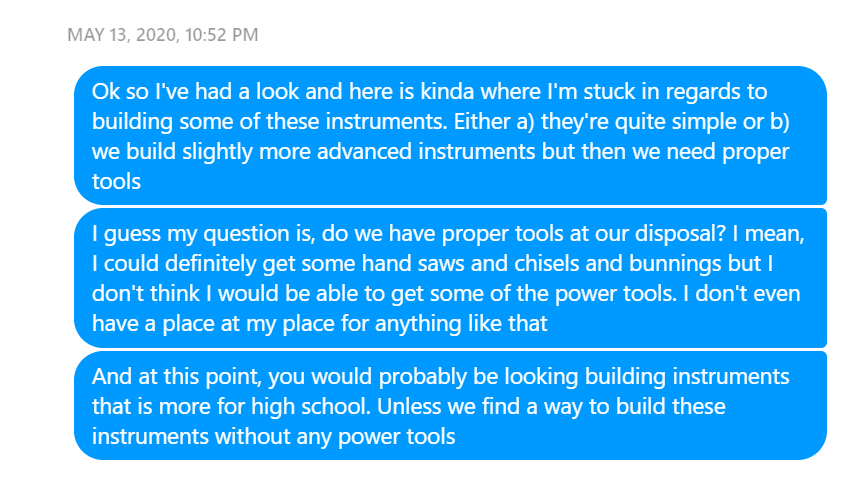
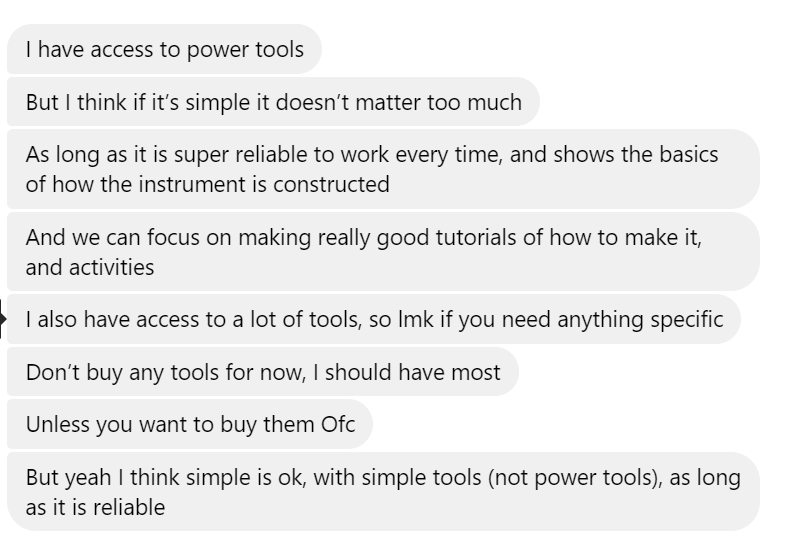
I had a chat with Lucy to see what she thought would be the best option. We did both want to create a type of violin/cello instrument (as I do play the violin) but it was proving to be a more and more difficult process. I was also struggling with how simple or complex the design should be. This is what I ended up sending to her on Messenger:

Lucy reassured me with her message:

In the end, though we did consider maybe going down the route of using power tools, we ended up deciding to try our best in avoiding them and keeping the designs easy enough for primary school children which would still challenge them and leave them with playable instruments.

So, to summarise, Lucy and I will try to build instruments that are complex enough in design but simple enough for students. Also no power tools. Easy, right? 😅

Week 12: To technology or not to technology (part 2)

So folk, here were are. The second last week before the end of this semester and thus, the end of Technology in Music Education unit. Next week, our class will have the great privilege of hosting Ethan Hein (more about him in the next blog post!) but because this week is technically the last time our amazing lecture James Humberstone will have the opportunity to lecture us, he has decided to round up the whole unit by having another very important discussion on the benefits of taking a break from technology.

Continue reading “Week 12: To technology or not to technology (part 2)”

Week 11: Music Theory and Musicianship can be Fun??!

*This message has been brought to you by a 1940’s telemarketer because that’s who I become when excited about a certain product. My apologies in advanced. If it makes you feel better, imagine me speaking with a trans-Atlantic accent*

Hello, hello and welcome to yet another post. So good to have you back. For this week, I would just like you to relax a bit and take a breath from all the awesome and mind-blowing technology to ponder on things that are a little more familiar and probably your absolutely favourite things to do ever: music theory and ear training 😅

Continue reading “Week 11: Music Theory and Musicianship can be Fun??!”